
 (32).png)
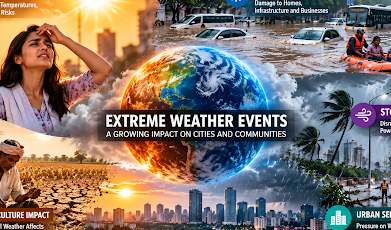
Description - Extreme weather events such as heatwaves, heavy rainfall, floods, storms, and prolonged dry periods can affect communities, infrastructure, agriculture, transportation, and public services. Growing urban populations and infrastructure challenges can increase the impact of some weather events on cities.
Preparing for extreme weather involves early-warning systems, resilient infrastructure, emergency planning, public awareness, and coordinated responses from communities and authorities.
Major Effects of Extreme Weather
-
Heatwaves: Can increase heat-related health risks and energy demand.
-
Flooding: Can damage homes, roads, drainage systems, and businesses.
-
Storms: Can disrupt transportation, electricity, and communication.
-
Agriculture: Unusual weather can affect crops and farming activities.
-
Urban Services: Extreme events can put pressure on water, healthcare, and emergency services.
Importance of Preparedness
-
Follow official weather warnings and emergency instructions.
-
Improve drainage and flood-management infrastructure.
-
Develop community-level emergency response plans.
-
Protect essential services and critical infrastructure.
-
Increase awareness about local weather-related risks.