
 (32).png)
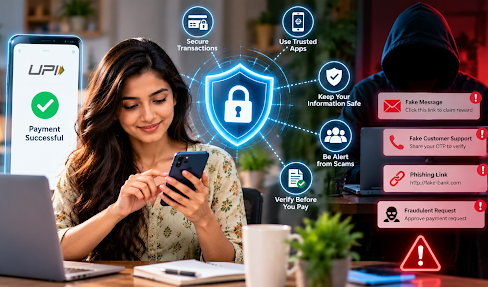
Description - Digital payments have made everyday transactions faster and more convenient, but users also need to understand common fraud techniques. Scammers may use phishing links, fake customer-support accounts, impersonation, fraudulent payment requests, or attempts to obtain sensitive information such as OTPs, PINs, passwords, or banking details. The Reserve Bank of India advises users not to share critical information such as PINs, OTPs, and passwords.
Being careful before approving a payment, checking the recipient's details, avoiding unknown links, and using only trusted banking or payment applications can reduce exposure to common digital-payment scams.
Common Digital Payment Frauds
-
Phishing: Fake messages or websites may attempt to collect banking or payment information.
-
Fake Customer Support: Fraudsters may impersonate bank or payment-service representatives.
-
Fraudulent Payment Requests: A scammer may send a payment request and convince the user to approve it.
-
OTP or PIN Fraud: Users may be tricked into sharing authentication information.
-
Fake Online Buyers: In online marketplaces, scammers may use payment-related tricks to persuade sellers to approve a transaction.
RBI guidance specifically warns that entering a UPI PIN is used to authorize sending money; a PIN is not required simply to receive money.
How to Stay Safe
-
Never share your OTP, UPI PIN, password, or banking credentials with anyone.
-
Verify the recipient and transaction amount before approving a payment.
-
Do not click suspicious links received through SMS, email, or social media.
-
Use official banking and payment applications.
-
Be cautious of unexpected calls claiming to be from banks or payment services.
-
Report unauthorised transactions to your bank/payment provider promptly and follow the applicable reporting process.